
Hotel Tirrenia a Viareggio

hotel 3 estrellas a Viareggio - Hotel a pocos pasos de la playa de Viareggio

Llame ahora
ItalianoEnglishDeutschFrançaisEspañolРусскийDutch
Preguntas más frecuentes
Contacto Skype™
Contacto
Llegada:
partida:
Personas:
Habitaciones:

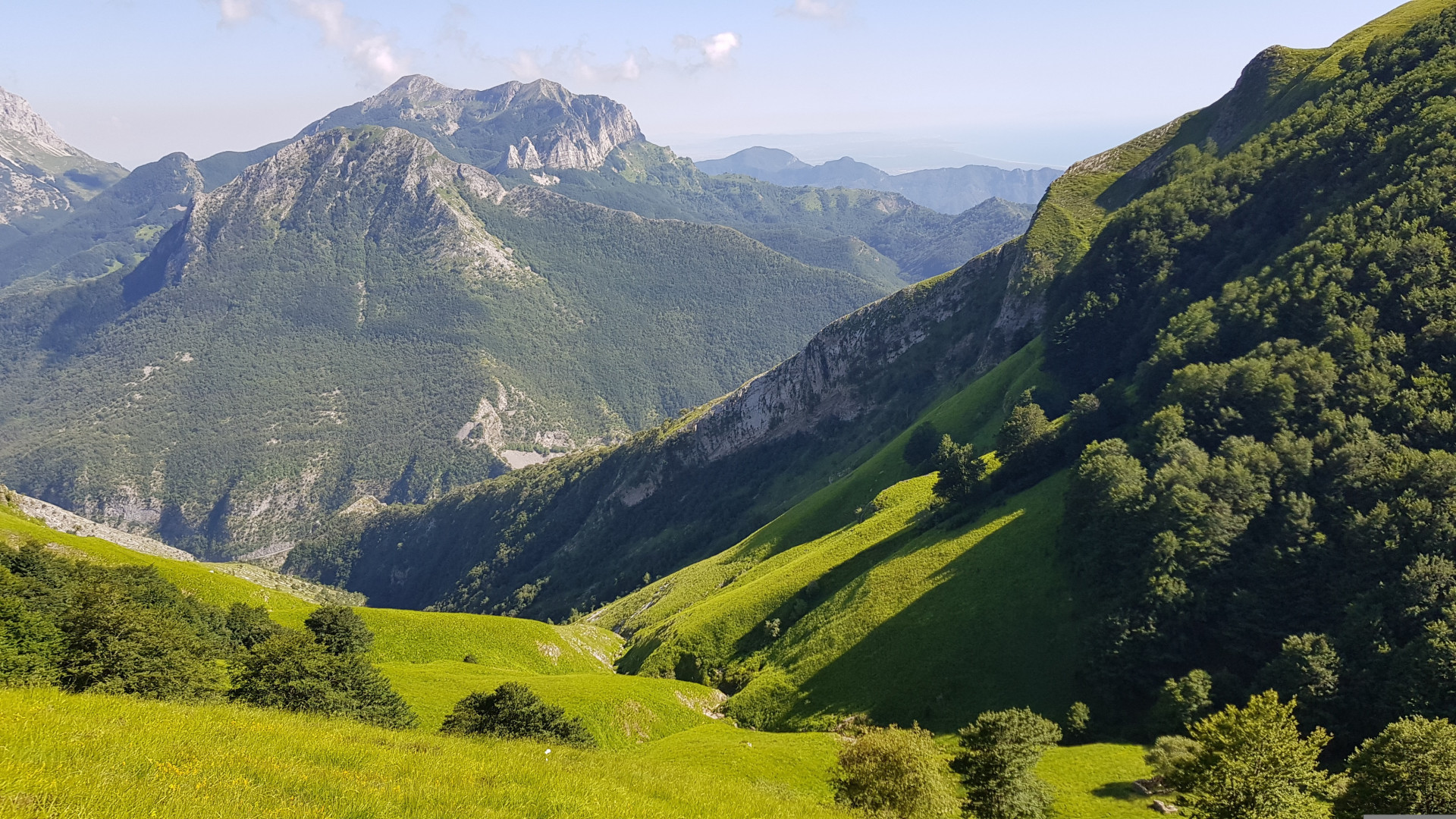
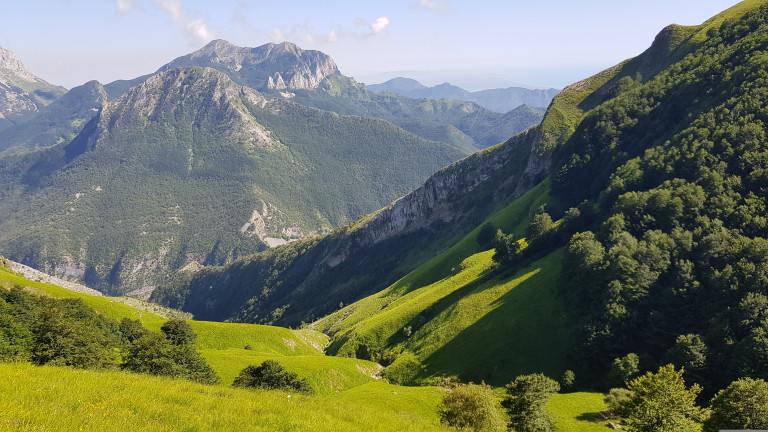
Alpes Apuanos

Alpi Apuane distinguish themselves from the near Apennine chain for their harsh morphology, their deep valleys, and their imposing and very inclined slopes. The Apuane are famous for the beauty of their marbles, their deep abysses, and the great cavities of the subsoil characterized by karst phenomena.

The geographical position of the massif, its exposure, and the different nature of the rocks determine the presence of varied and contrasting environments which favor the floral and faunistic richness of the territory.

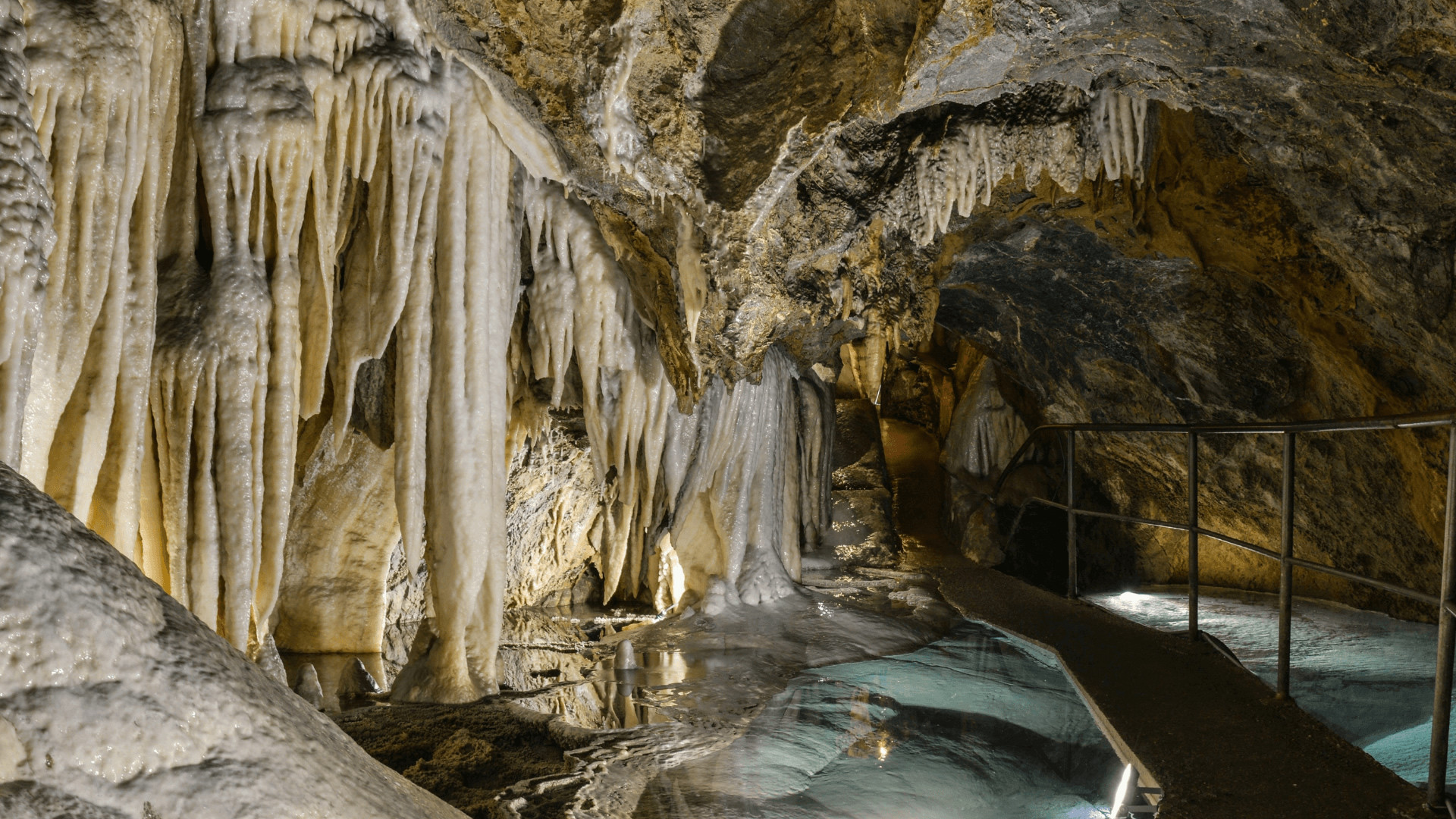
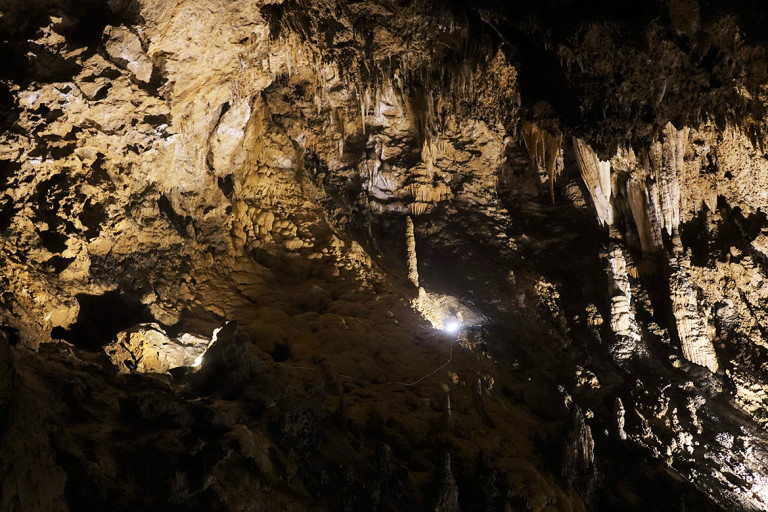
Antro del Corchia

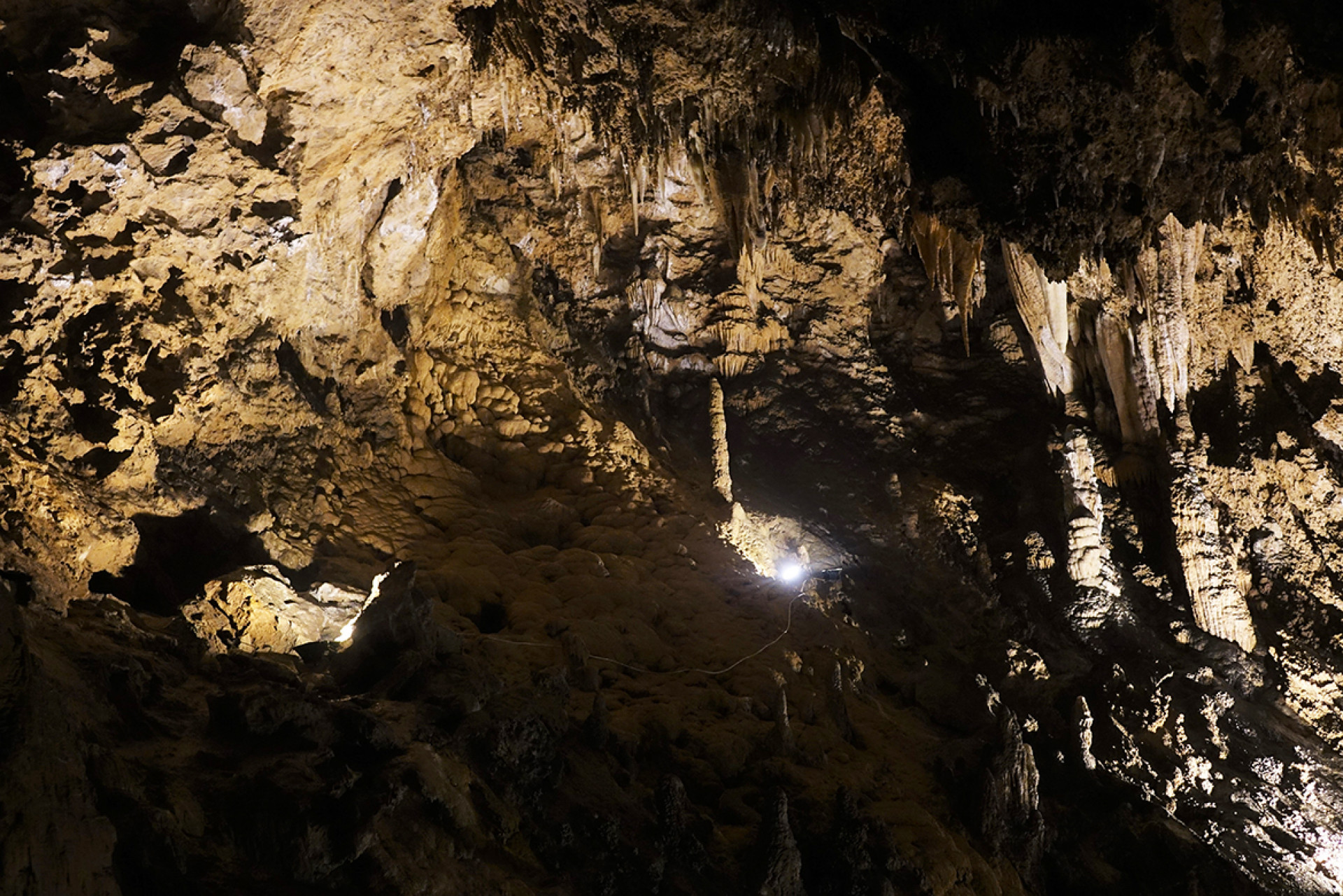
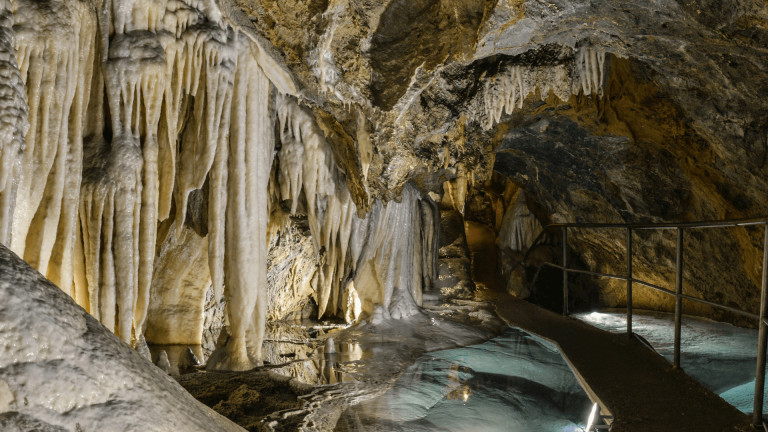
The Monte Corchia cave system in the Apuan Alps regional park is the largest cave system in Italy and one of the biggest in Europe. With five million years of geological history behind it, its over 60 km of galleries plunge 1200 m into the earth. Although exploration of the cave, the third deepest in Italy, began in the 1800s, it was only in 2001 that the public at large was able to admire the majestic columns of stalactites and stalagmites, the shields, hardpans and also the underwater formations such as the “cave pearls”.

The work to provide access to the cave was carried out so as to respect the subterranean environment, which is extremely sensitive and delicate: by way of an example, the lighting system, consisting of diffused lights dotted along the trail, is regulated so that it only turns on when visitors pass through in order to lessen the effects on the underground world.

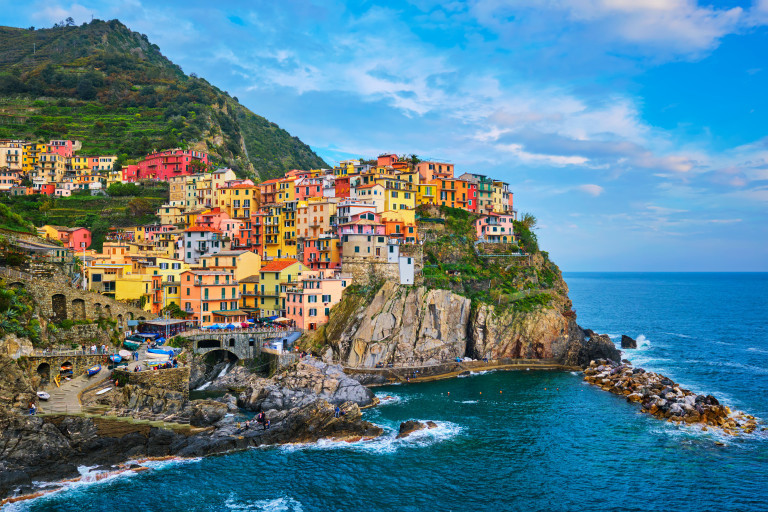
Cinco Tierras

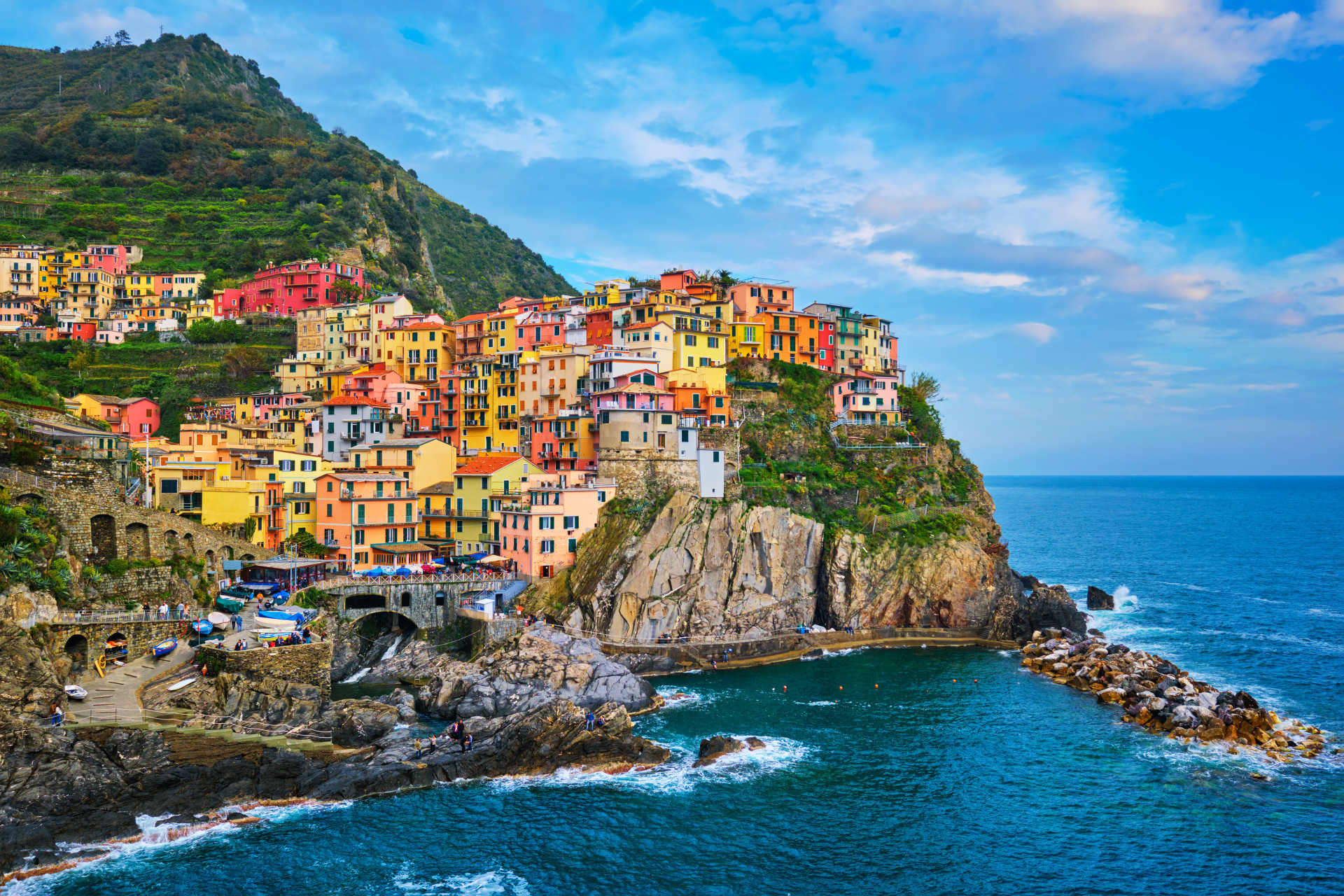
It's important to remark that the Cinque Terre are not a classic touristic resort...particularly in Manarola and Corniglia everything has remained as in the past, no adjustments to the new touristic bent of these towns; local people's life has been influenced by tourism only in marginal aspects. These are, with no doubt, the main features of the Cinque Terre: a very different dimension, so distant from the towns's stress as from the "all inclusive paradises" where everything is carefully planned and organized. Of course this uniqueness requires some sacrifices: difficulties in moving and parking, lack of services, tiring up and down hikes...

After all the Cinque Terre aren't suitable for everybody; not for the ones who like (and it's a very respectable point of view indeed) exclusively a comfortable and served holiday... We don't want to run the risk that the tourist may expect something different from reality; but we well know that who loves the Cinque Terre would't desire them to be different from what they are!

Florencia

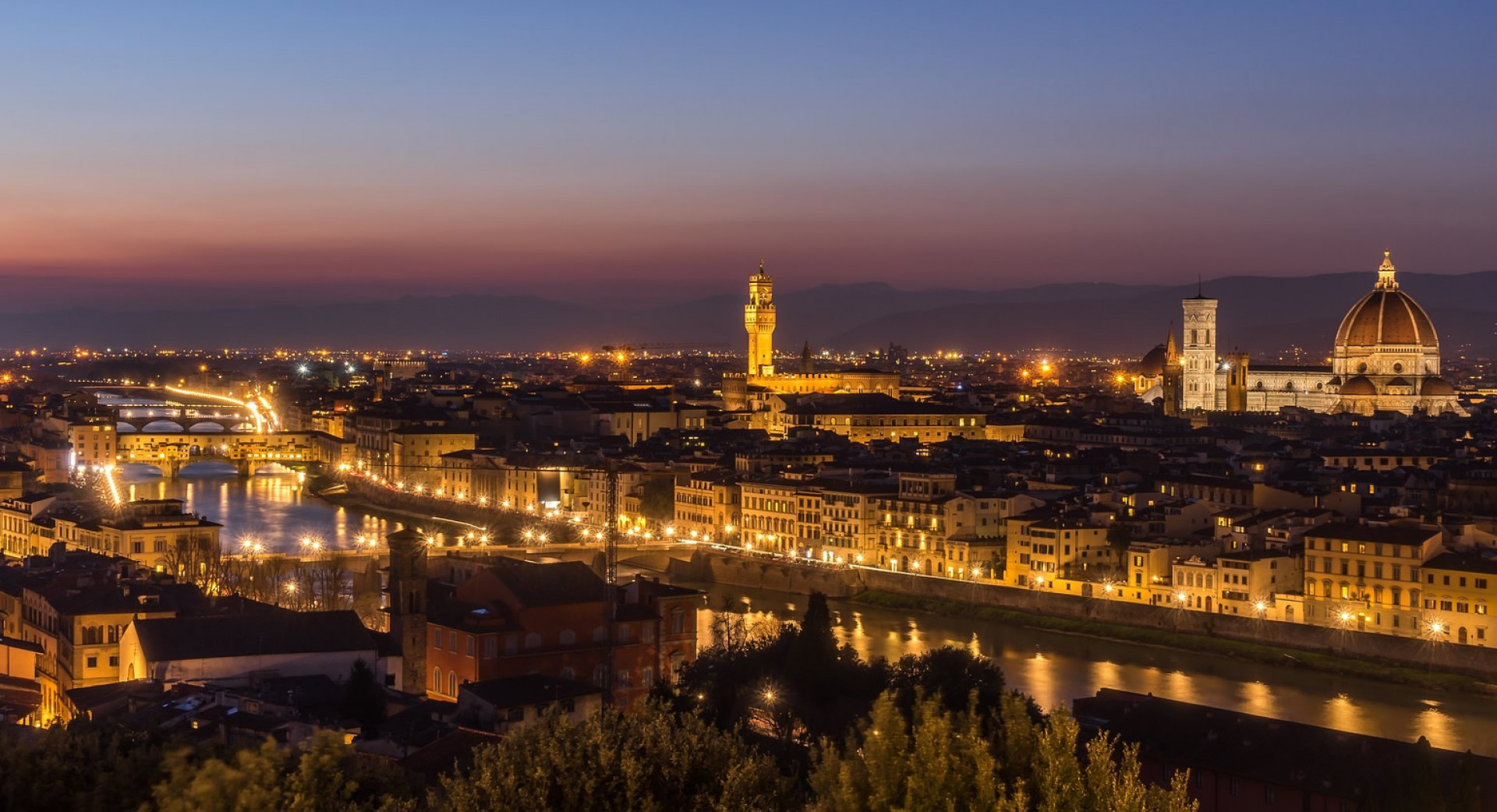
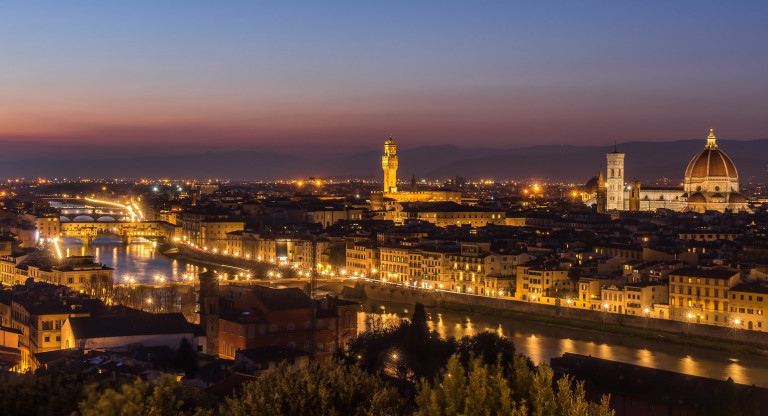
Florence contains an exceptional artistic patrimony, glorious testimony to its secular civilization. Cimabue and Giotto, the fathers of Italian painting, lived here, along with Arnolfo and Andrea Pisano, reformists of architecture and sculpture; Brunelleschi, Donatello and Masaccio, founders of the Renaissance; Ghiberti and the Della Robbia; Filippo Lippi and l'Angelico; Botticelli and Paolo Uccello; the universal geniuses Leonardo da Vinci and Michelangelo. Their works, along with those of many generations of artists up to the masters of the present century, are gathered in the city's many museums.

In Florence, thanks to Dante, the Italian language was born; with Petrarch and Boccaccio literary studies were affirmed; with Humanism the philosophy and values of classical civilization were revived; with Machiavelli modern political science was born; with Guicciardini, historical prose; and with Galileo, modern experimental science.

Up to the time of Charlemagne, Florence was a university town. Today it includes many specialized institutes and is an international cultural center. Academies, art schools, scientific institutes and cultural centers all contribute to the city's intense activity.

Garfagnana

In the far northern area of the Tuscan Region there lies a valley, rich in history and traditions that is very close to famous and important historical centres such as Lucca, Pisa and Florence. This valley, created by the Serchio River and its tributaries, is a chest full of natural treasures enclosed between the chain of the Apuan Alps and the Tuscan-Emilian Appennines. The contrast between these two environments, not only morphologically, but socially and traditionally different as weil, has generated an unusual variety of images and colours.

This is the ideal environment for those who want to live in contract with nature and at the same time rediscover the history of a valley and the traditional hospitality of its inhabitants. Discovering Garfagnana on horseback, on foot, by mountain-bike, proceeding along the paths and old muletracks, and looking at the history of these mountains.

Grotta del Vento

About 200 million years ago, enormous quantities of shells, coral formations, fish skeletons, sand, slime and calcium carbonate, chemically precipitated through water evaporation, began to settle at the bottom of a sea which could correspond to the actual Tyrrhenian sea. This detritus, though varying in quantity and composition, kept accumulating, layer upon layer, for at least 170 million years, forming a mass thousands of metres thick. The great weight of such an accumulation, brought about the compression and the cementation of the various elements, slowly transforming them into limestone rock.

About 20 million years ago, strong thrusts (orogenic movements), linked to the movement of the earth's crust, caused the upheaval of this rocky body, the great pressure fracturing it enormously, causing it to emerge from the sea and to slowly form the mountains we see today.

Rainwater, falling on the cracked mountain surface was immediately absorbed by the subsoil, where various rivulets united, thus forming the subterranean streams, torrents and rivers which over millions of years progressively amplified the crevices, creating those intricate networks of galleries, caverns, pools and minerals which make up the underground complex of the Wind Cave.

Lucca

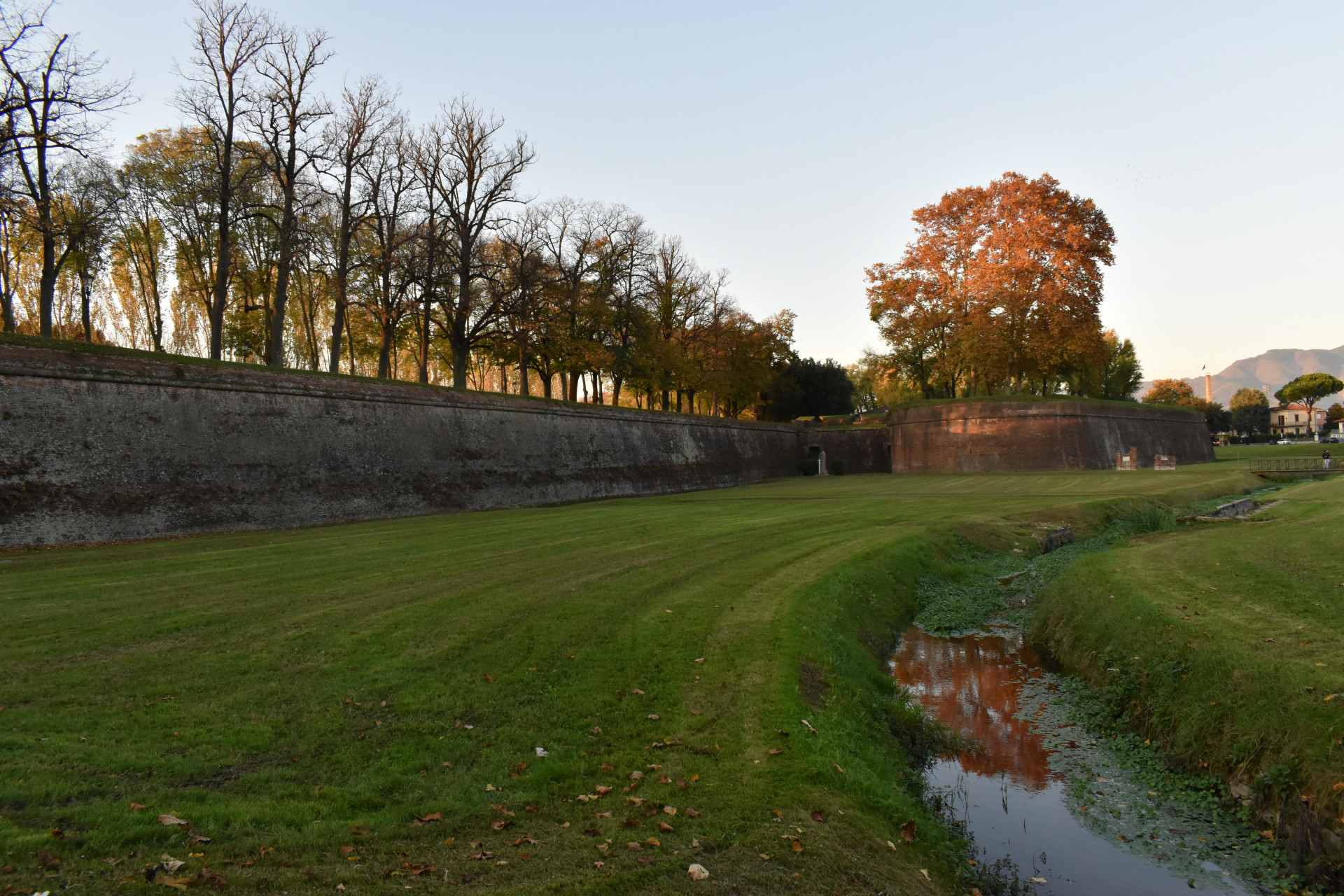
Lucca is a city quite particular, and in a way, magical. Since early Roman times the historical eras of Lucca are manifested in the various and abundant architectural splendours, invention and modification superimposed on its precedent page in history. Lucca is adorned from the severe romantic to the most sumptious of the renaissance resulting in a splendour of unsurpassed harmony.

The superb churches of San Michele and San Martino integrate splendidly with the noble palaces built four or five hundred years later. The Roman amphitheatre, superimposed with the ancient market place, blends with the rest of the city as if it were an architect before its time projecting to the citizens the style in which the city was built. The pleasure that Lucca concedes is not only artistic, the old grocery and pastry shops situated in the via Fillungo offering the most exquisite local specialities, the wine taverns, the characteristic trattorias and the restaurants testify to the long tradition that the Lucchese have for the pleasures of the table. This is also a form of culture that has been handed down for centuries and hopefully will never cease, as never passes by fashion for the art treasures that Lucca offers and permits to be lived daily.

Pietrasanta

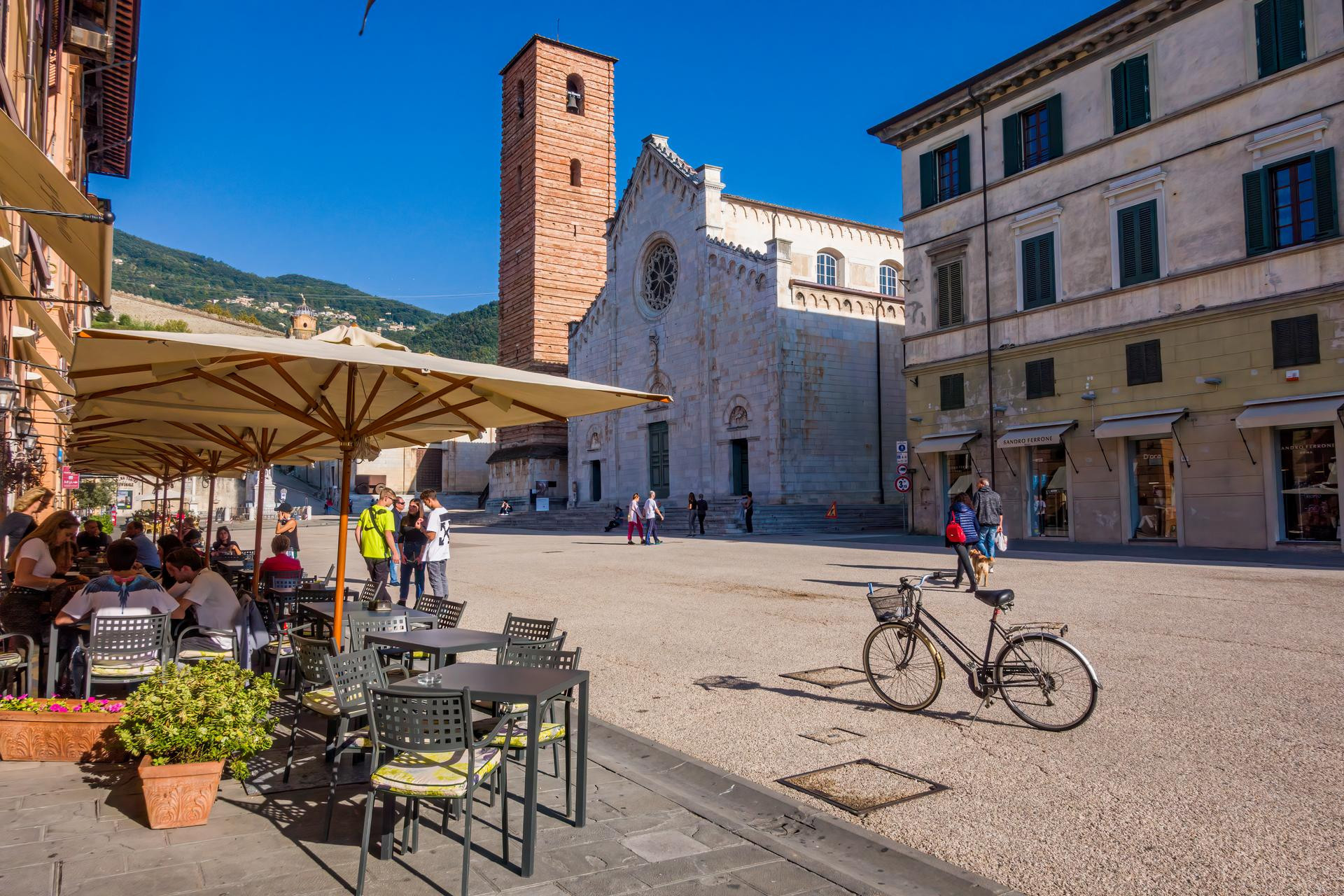
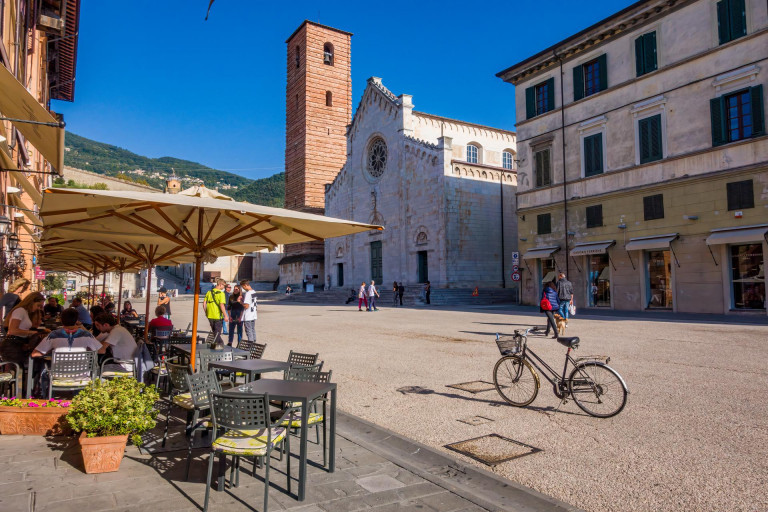
Historic and artistic capital of Versilia, Pietrasanta remains faithful to its tradition, showing examples of religious, military and civilia architecture. Without any doubt Piazza Duomo is the undiscussed value of the town. Dominated by th "Rocca di Sala" (XIV century, which rises from the homonymous hill with its bastion and embattled walls in a thick olive-grove).

Hearth of the historic center, the square is encircled by the San Martino's Cathedral (XIV century) with its red brick belltower, the Sant'Agostino's church (XIV century), the "Torre delle Ore" (Tower of the Hours, XVI), and sober buildings among which the Palazzo Pretorio (XIV century), Palazzo Panichi (or Carli) and the RocchettaArrighina (XIV century) and the Palazzo Moroni (XVI century).The square is moreover embellished by the Fonte del Marzocco (XVI century), the Colonna della Liberta (XVI century) and the monument to Leopoldo II (XIX century).

Other important buildings of the historic center are: the San-t'AntonioAbate's church (XIV century) that houses two large frescoes by Fernando Botero, San Francesco's church (XVI century) and the Palazzo della Posta Vecchia (XVI century). The monumental church building of Sant'Agostino's church, with the ancient former monastery ofAugustinian friars is not only the center of important exhibitions, but also an intense activity congress in its Cultural Center "Luigi Russo" that houses the local Library G. Carducci, the Center for Studies of Historic and Contemporary Gardens and the "Museo dei Bozzetti". This very unusual museum means that Pietrasanta has become popular as an international reference point for people interested in sculpturing.

Pisa

Lying a few kilometres from the sea, at the end of a long fertile plain, that of the river Arno, Pisa is in the centre of an area characterised by an incomparable natural environment, composed of great woods along the shores dominated by the scent of pine and brackish air, now enclosed in a Nature Park that protects them.

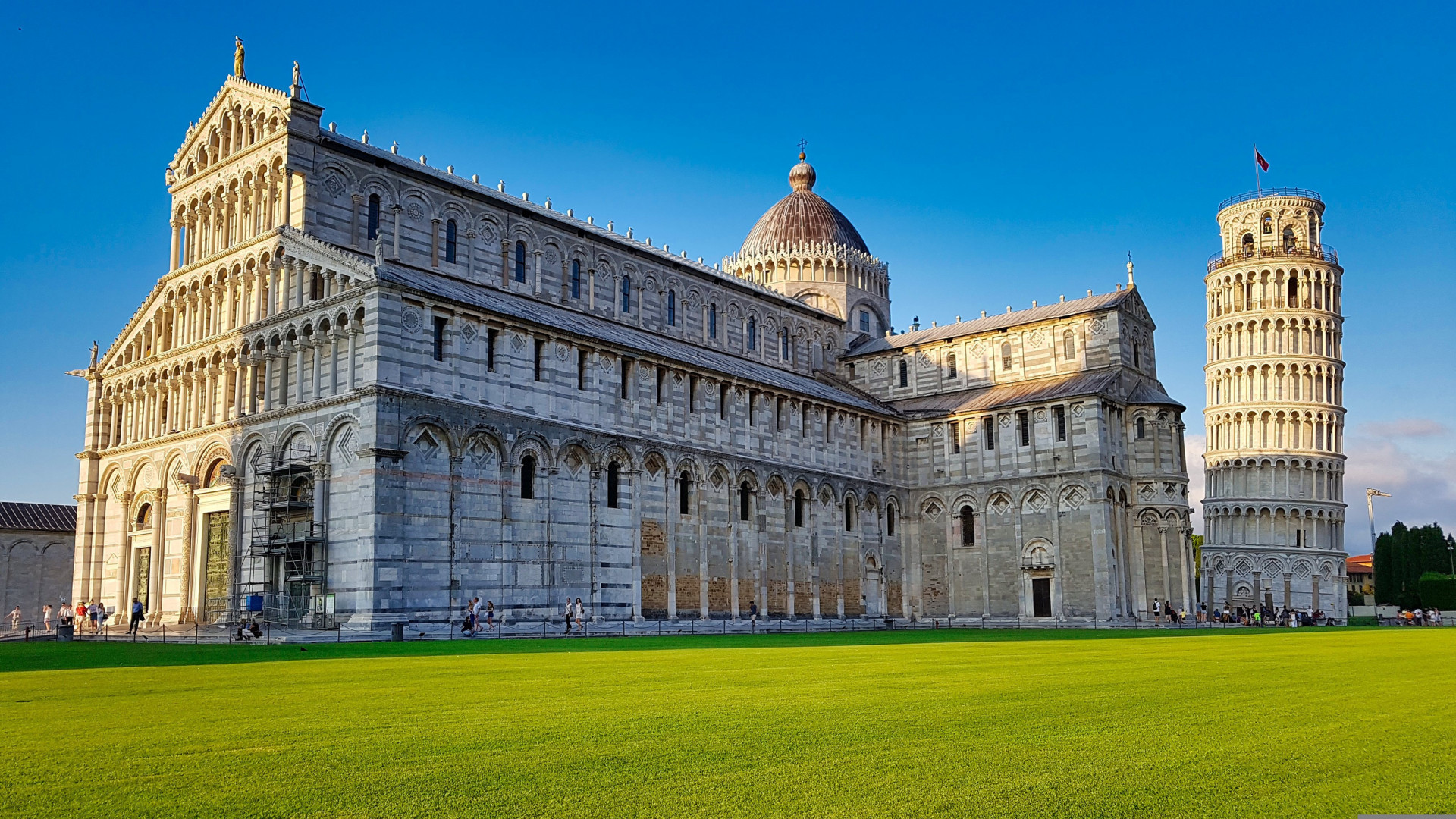
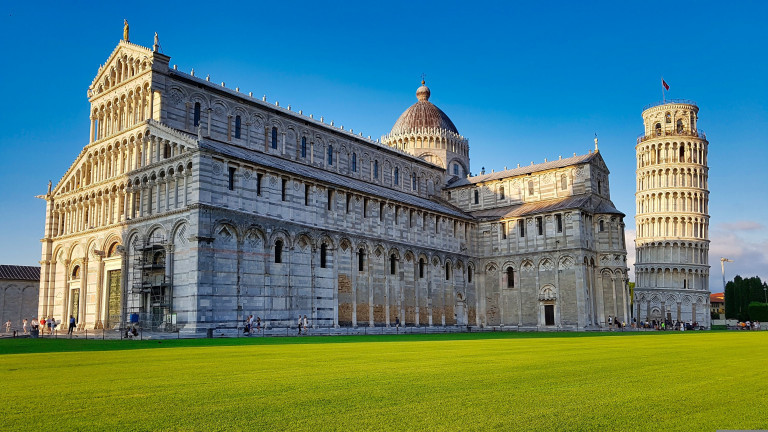
Coltano, Tombolo, Migliarino, San Rossore, also Marina di Pisa and Tirrenia area the capitals of this environment which makes Pisa unique, not only on the Tuscan scene. Pisa, an ancient Roman port and great maritime republic, is no longer on the sea but its splendid past lives within its abundant historic and artistic monuments: narrow streets that open into picturesque little squares with multicoloured markets; the noble "Lungarni" with its splendid and majestic palaces; the charming Piazza dei Cavalieri and Piazza dei Miracoli, one of the most famous monumental complexes in the world with its Cathedral, Baptistery, Camposanto and famous Leaning Tower, symbol of the city.

A town of bell towers and churches, unique and unmistikable with their pure Romanesque style, Pisa also offers visitors a series of folk events. These include the Musical Season, the great Historical Boat Race, the famous Game of the Bridge and the "Luminara", a fantastic candle-light illumination of the Lungarni held every year on 16th June, on the eve of the feast of the town's patron saint Ranieri.

San Gimignano

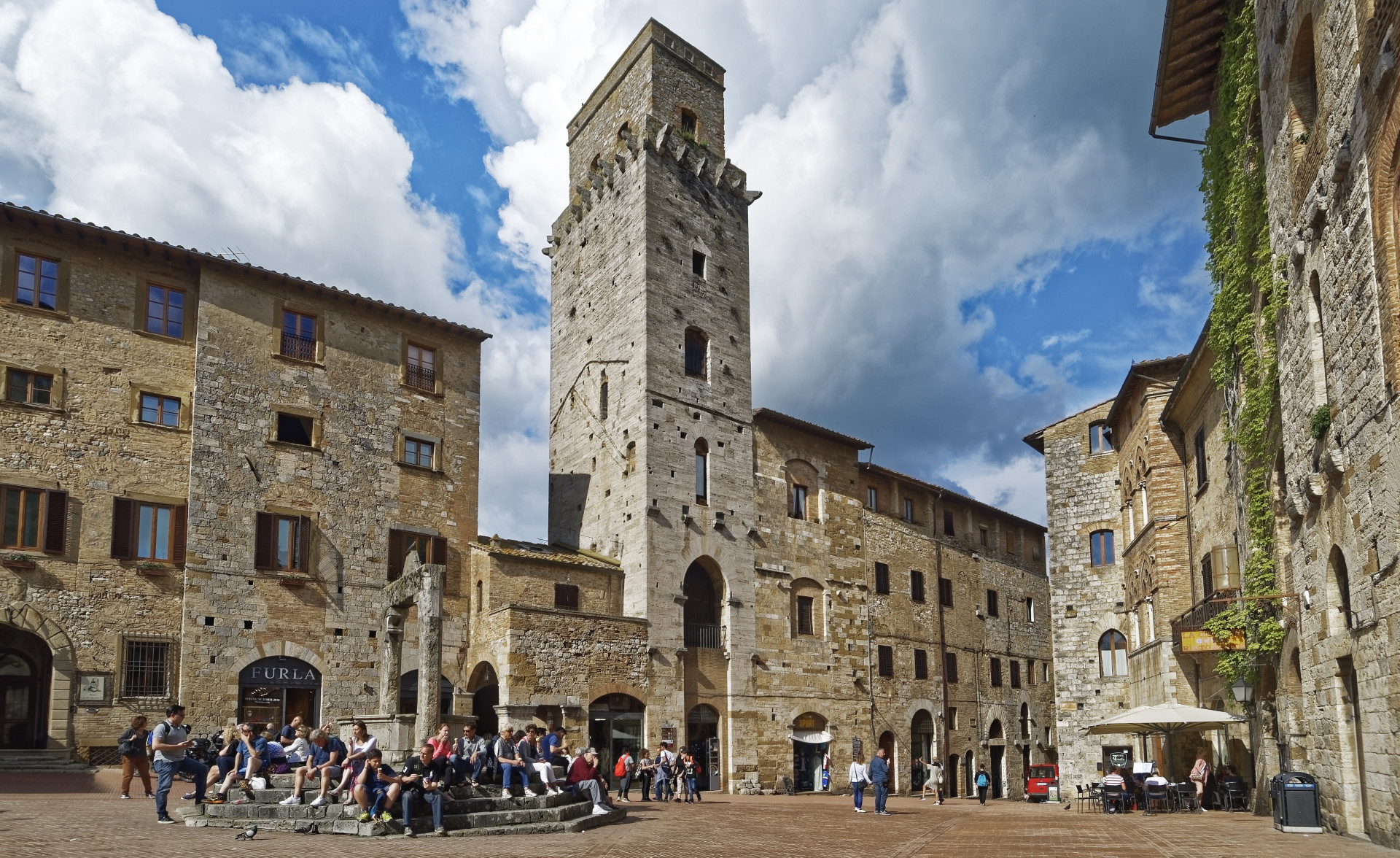
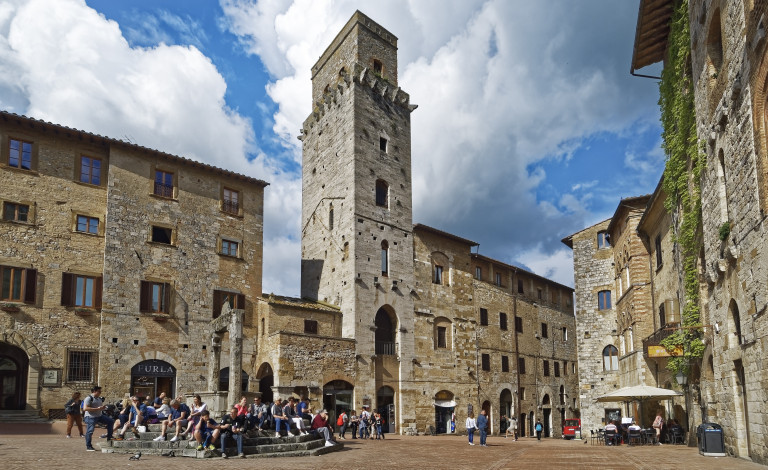
San Gimignano rises on a hill (334m high) dominating the Elsa Valley with its towers. Once the seat of a small Etruscan village of the Hellenistic period (200-300 BC) it began its life as a town in the 10th century taking its name from the Holy Bishop of Modena, St. Gimignano, who is said to have saved the village from the barbarian hordes. The town increased in wealth and developed greatly during the Middle Ages thanks to the "Via Francigena" the trading and pilgrim's route that crossed it. Such prosperity lead to the flourishing of works of art to adorn the churches and monasteries.

In 1199 it became a free municipality and fought against the Bishops of Volterra and the surrounding municipalities. Due to internal power struggles it eventually divided into two factions one headed by the Ardinghelli family (Guelphs) and the other by the Salvucci family (Ghibellines). On the 8th May 1300 Dante Alighieri came to San Gimignano as the Ambassador of the Guelph League in Tuscany. In 1348 San Gimignano's population was drastically reduced by the Black Death Plague throwing the city into a serious crisis which eventually led to its submission to Florence in 1353. In the following centuries San Gimignano overcame its decline and isolation when its beauty and cultural importance together with its agricultural heritage were rediscovered. The construction of the towers dates back to the 11th and 13th centuries. The architecture of the city was influenced by Pisa, Siena and Florence. There are 14th century paintings of the Sienese School to be seen and 15th century paintings of the Florentine School.

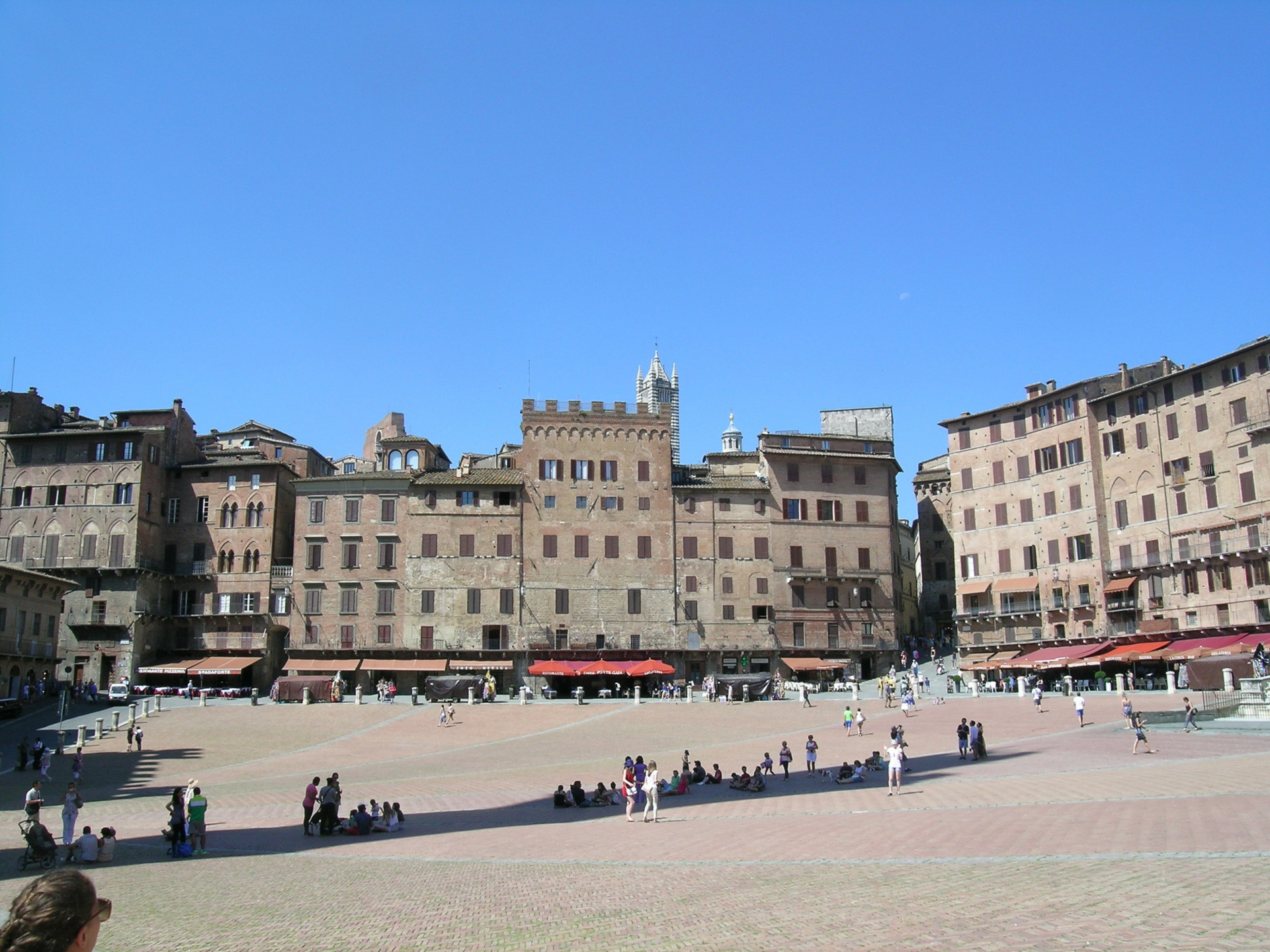
Siena

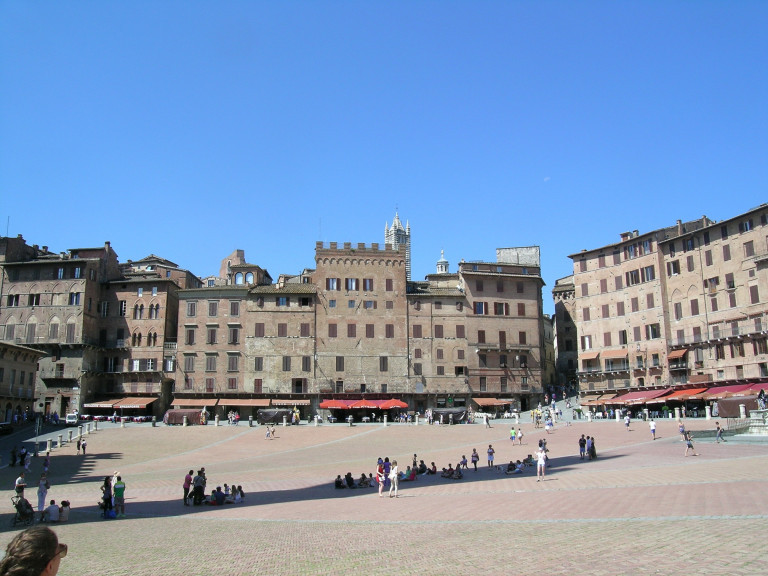
Siena is ... the city of the blessed Virgins and the "Balzana"; black and white; decisive, just as its heraldic symbol; passionate and contemplative; always climbing and descending; clear and at the same time obscure; steep and narrow streets; the red of the Piazza del Campo appearing blinding and suddenly. In the alleys, in the museums and oratories of the Contrada, the spiritual songs of the Palio evoke very ancient rituals and modern allegories, while during the evening the shuffling of soles on the deserted pavement is in contrast with the peacefulness of the green valleys providentially enclosed within the wall, which ancient administrators had erected hundreds of years before it became common practice.

Siena is also the Cathedral and the extraordinary panorama from the Facciatone; the Sala del Pellegrinaio in Santa Maria della Scala, the Libreria Piccolomini and the prestigious Accademia Chigiana; the enormous Medicean fortress that on the inside, at the Enoteca Italiana, harbors the most precious wines of Siena, Tuscany and the peninsula; sweet-smelling Trattorias, sweet spices, the sounds of the artisans and spouting fountains; Fontebrande and the mystery of the Diana, a famous river underneath Siena; the alchemy geometry of the Piazza, suggestively neo-Gothic and cathartic. And these are the reasons why "Siena opens up its heart more than any other place", as the famous inscription reads on the Porta di Camollia.

Las calles del Vino - Chianti

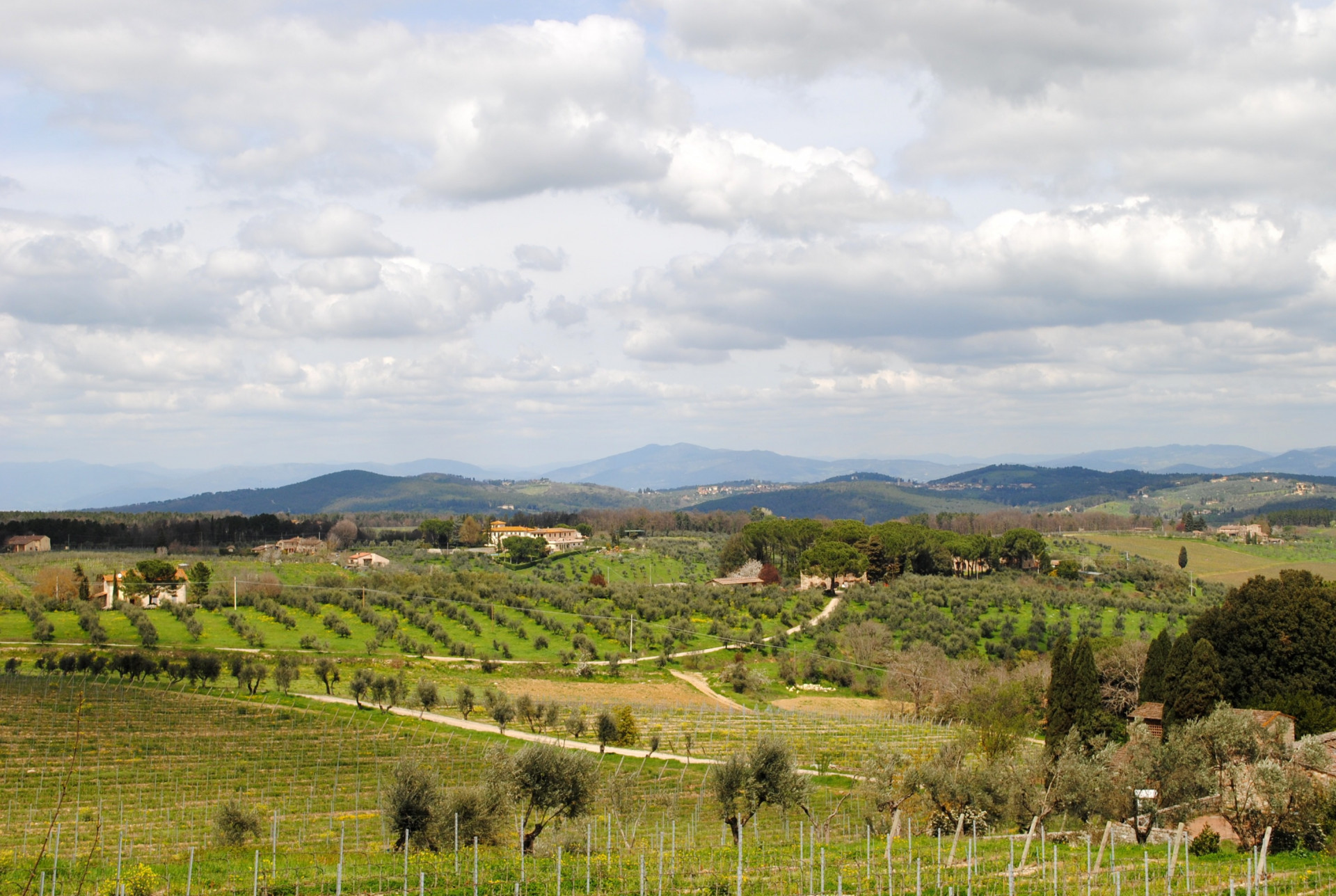
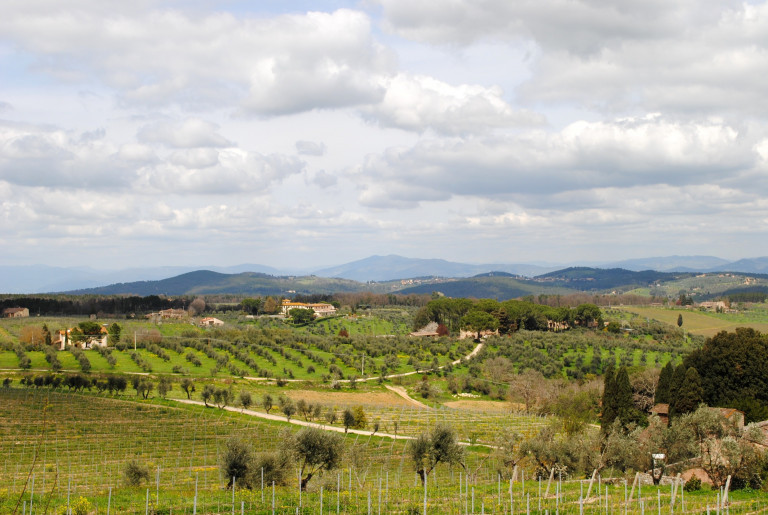
The Chianti region stretches on a large country area going from Florence to Siena and delimited by rivers Arno, Elsa, Ombrone and Arbia. On its hills, set amidst very preciuos vine-yards and historical villages, is produced the famous Chianti wine. Some documents of XIIIth century and the great number of castles and fortified churches are the evidence that the area including the villages of Castellina, Radda and Gaiole, ones belonging to Florence, was frequently scene of historical battles.

With the diffusion of agricolture the country farms were transformed from centres of share cropper system into modern wine farms. As from the point of view economical this area is very important and includes more than one district, the wines produced in the region from Florence to Arezzo have been classified with various names: Chianti Classico, Montalbano, Colli fiorentini, Colli senesi, Colli aretini, Colline Pisane e Pistoiesi.

The most famous one, the Chianti Classico, is produced near Siena, in the districts of Castellina, Gaiole, Radda, Castelnuovo Berardenga and Poggibonsi. The grapes used for it are the "Sangiovese", "Cenaiolo", "Malvasia", "Trebbiano", manifactured in the modern wine cellars. The Chianti is "world apart", an earthly paradise known and celebrated all over the world.

Canteras de Mármol

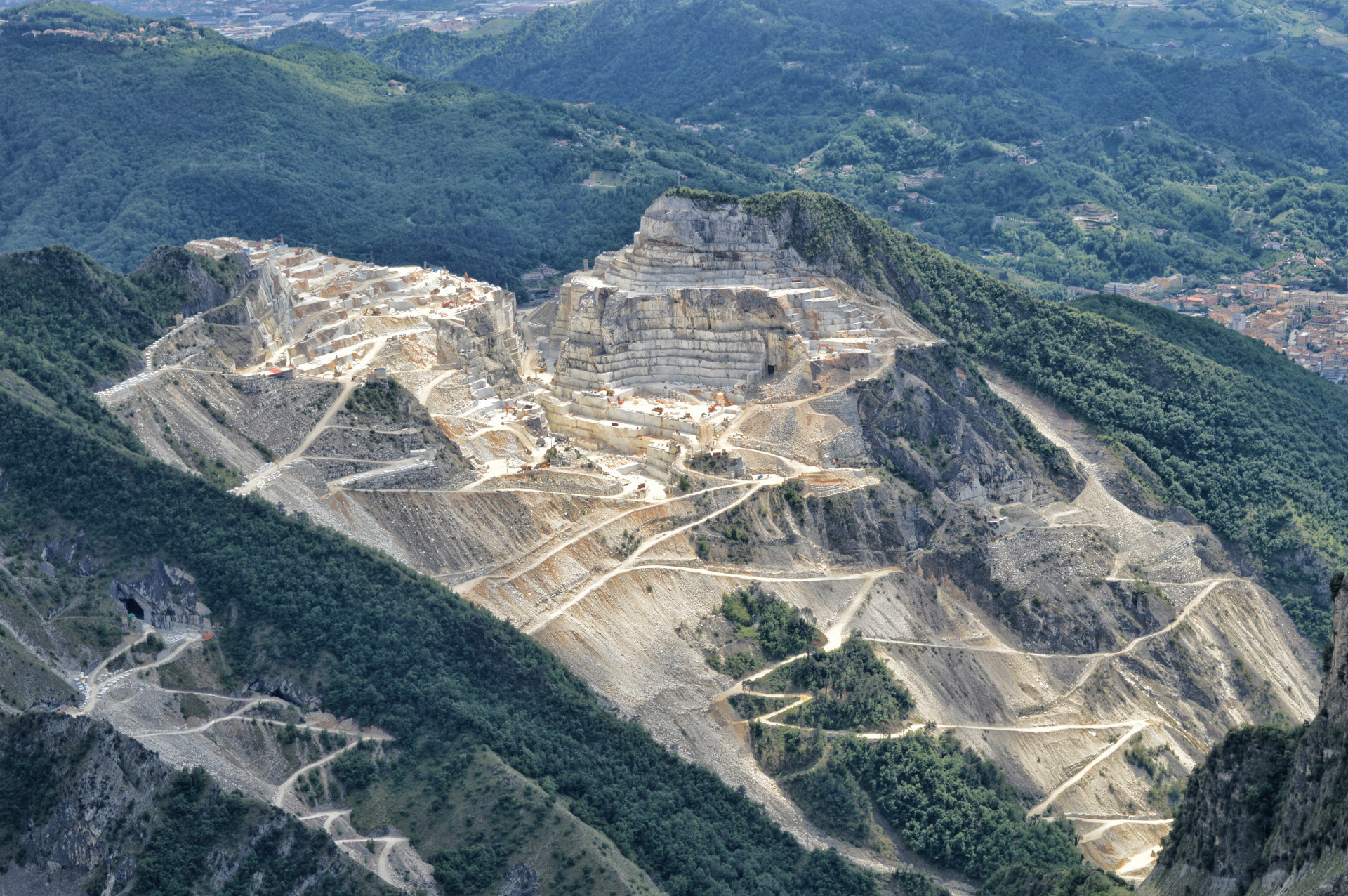
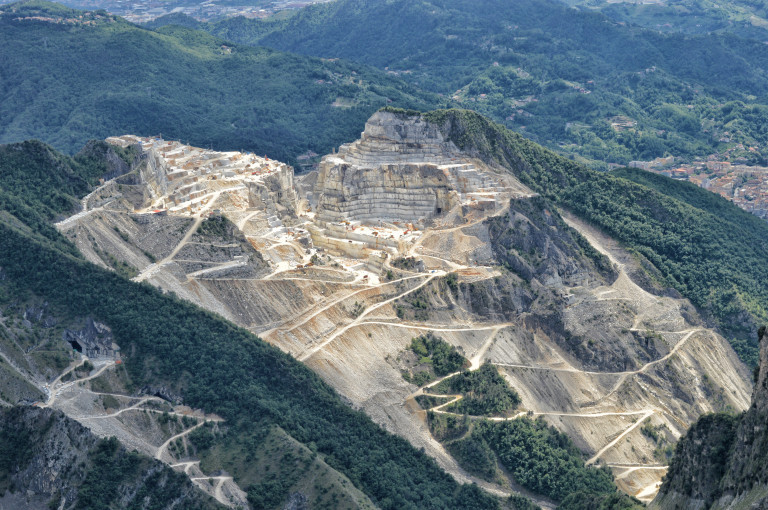
In the Apuan Alps the spectacular marble quarries offer an evocative sight. Here this precious white stone has been excavated since Roman times. Since then, it has been used for all sorts of different purposes: from the simple objects to more famous works of art and architecture.

In the past the blocks of marble were carried to the plain with an ancient manual technique called “ Lizzatura” which is recalled each year thanks to the courage and skill of the last living “Lizzatori In the art  laboratories of Carrara , at the Marble Museum and at open exhibitions, it is possible to see the history and the working of the marble. Chain of mountain crests which stand out clear and impressive on the remaining Appennino, this landscape with its still here and there intact places, and its marble quarries on the slopes is two thousand years old at least.